Which Type of Flat Roof Covering Has the Longest Lifespan?
If you've got a flat roof on an extension, garage, dormer or bay window, sooner or later you'll ask the same question every customer asks us: what should go on it so I don't have to do this again in a few years? Here's an honest guide from a Doncaster roofing company that replaces flat roofs every week. It covers how long each covering lasts, how often a flat roof needs redoing, and the downsides to be aware of.
The main types of flat roof covering
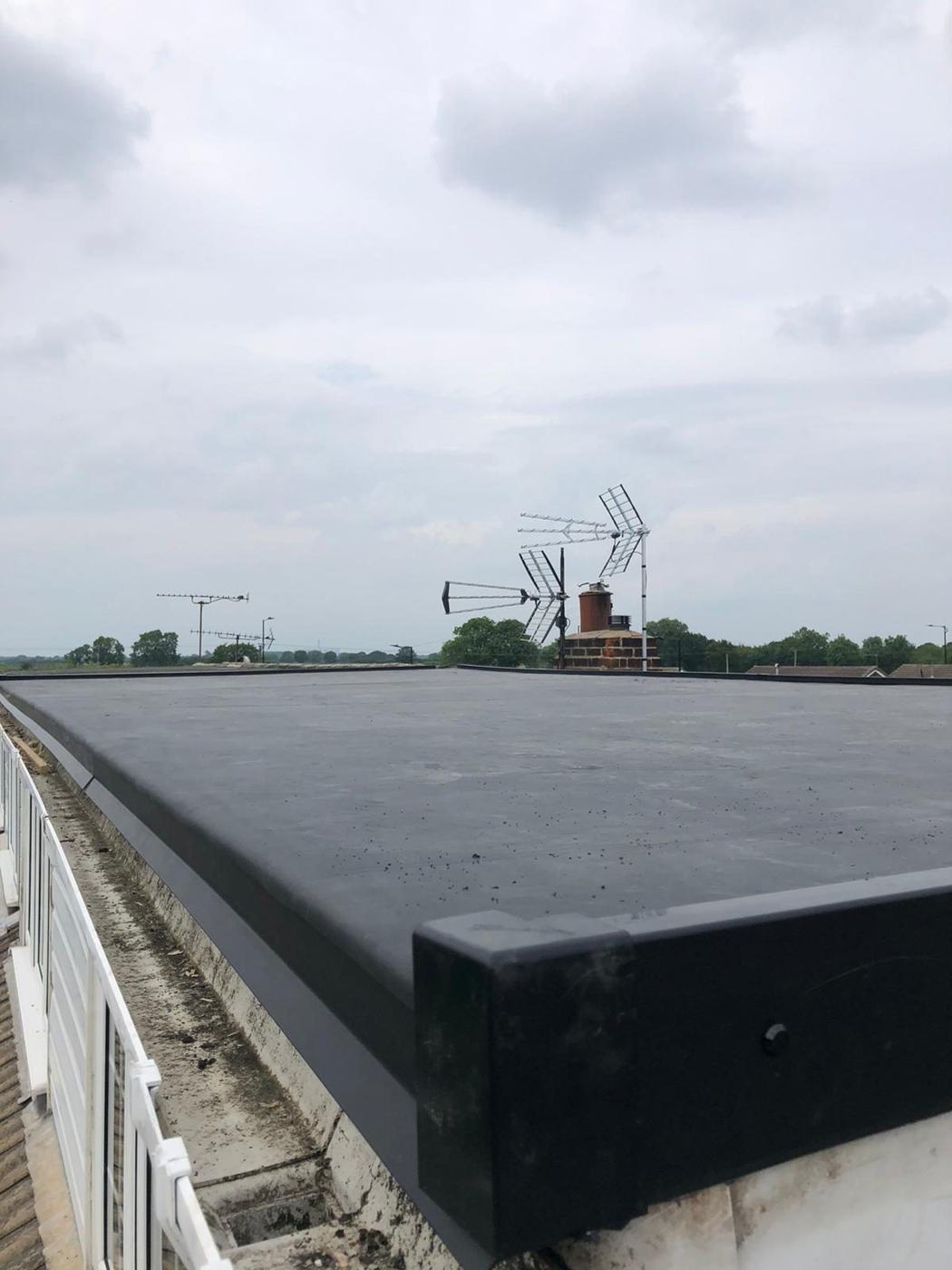
EPDM rubber: a single sheet of synthetic rubber bonded to new decking, with no joints across the roof for water to find. EPDM is flexible, copes well with hot summers and freezing winters, and doesn't crack as it ages. A well-installed EPDM roof typically lasts 20 to 30 years or more.
GRP fibreglass: layers of glass-fibre matting and resin that cure into a hard, seamless shell. GRP is very durable when it's laid properly in dry conditions, and can last 25 years or more. It's less forgiving if the deck moves, and it has to be installed in the right weather.
Torch-on felt (modern built-up felt): two or three layers of reinforced bitumen felt bonded with heat. Modern felt systems last roughly 15 to 20 years. They're a big improvement on old felt, but they still have laps and joints that can fail over time.
Old-style felt: the cheap felt roofs found on a lot of garages and older extensions usually only last 10 to 15 years before they split, blister or start letting water in.
So which lasts longest?
For most homes, EPDM rubber and GRP give you the longest life. We fit EPDM rubber on almost all of our flat roofs because it's a single seamless membrane, handles movement well and has a proven track record. It's also why we can offer a 20-year guarantee on the flat roofs we install.
Whichever covering you choose, how long it lasts depends just as much on the work underneath it: sound, dry decking, a proper fall so water runs off, correct trims and upstands, and good detailing where the flat roof meets a wall. Most early failures we're called out to come down to poor installation, not the material.
How often does a flat roof need to be redone?
As a rough guide, an old felt flat roof will need replacing every 10 to 15 years, a modern torch-on felt roof every 15 to 20, and EPDM or GRP every 20 to 30 years or more. If you're on your second or third patch repair, it's usually time to replace it rather than keep paying for repairs.
Signs your flat roof needs replacing: water pooling for days after rain, splits, cracks or blisters in the surface, damp patches on the ceiling below, soft or spongy areas when walked on (rotten decking), and flashing or trims coming away at the edges.
The disadvantages of a flat roof
Flat roofs are practical and cost-effective, but it's worth knowing their downsides. They don't shed water as quickly as a pitched roof, so a poor fall leads to ponding. They generally don't last as long as a tiled pitched roof. They need checking now and then, especially after storms, and the gutters and outlets need keeping clear. Done properly in EPDM, most of these problems are minimised.
What we recommend
If your flat roof is leaking or near the end of its life, we'll usually recommend stripping it back, replacing any rotten boards, and fitting a new EPDM rubber roof with new trims. It costs a little more than felt up front, but it lasts far longer and comes with our 20-year guarantee.
Want an honest opinion on your flat roof? We offer free inspections across Doncaster and South Yorkshire. Get a quote using the form on this page, or call us on 01302 456781.
Need a roofer in Doncaster?
We've been looking after roofs across Doncaster and South Yorkshire since 2014. See our flat roofs page, or get a free, no-obligation quote.
Get my free quote Call 01302 456781Related services: